
Sep
Technical Benefits
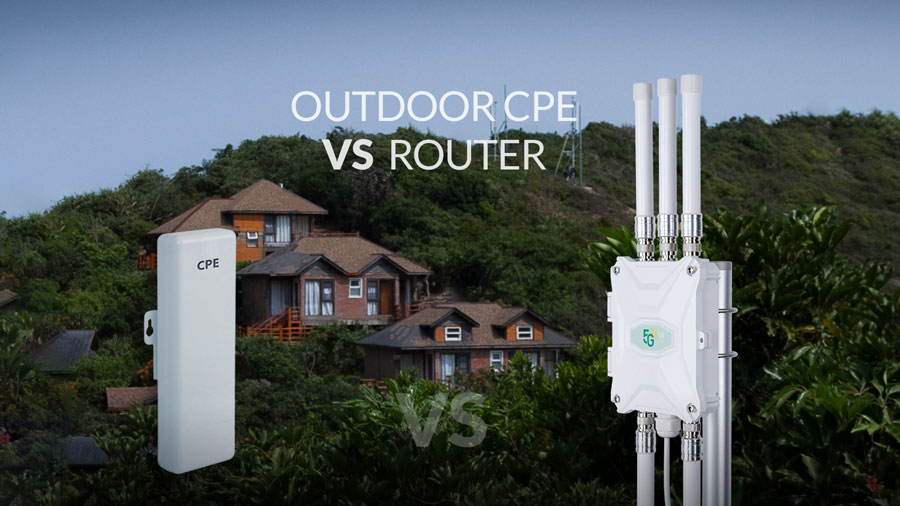
Outdoor Router vs Outdoor CPE
Outdoor network connectivity is increasingly essential for mobile devices and smart appliances. Outdoor CPE and routers are widely used to provide outdoor coverage. Knowing their differences can assist you in selecting the right solution.
What Is An Outdoor CPE?
CPE, short for Customer Premises Equipment, is the broad category of telecom equipment used to access internet connections. A router is an intelligent CPE designed explicitly to route traffic between networks and devices, offering more functions such as NAT, DHCP, firewalling, and multi-client management.
An outdoor CPE is a weatherproof wireless networking device installed outside the home or facility to provide internet connectivity. It is typically used as an outdoor access point (AP), wireless client, or bridge to extend or distribute Wi-Fi across outdoor areas, such as the outdoor Wi-Fi extender shown below.
Outdoor CPE vs Outdoor Wi-Fi Extender
The outdoor Wi-Fi extender is a powerful outdoor CPE. It receives internet from other Wi-Fi hotspots or a PoE injector, then sends a boosted Wi-Fi signal to greater distances. Economical outdoor CPEs usually lack networking management tools, such as a DHCP server, and must rely on the master internet router.
Outdoor Router with Mobile SIM Modem
With all the above-mentioned essential features of outdoor CPE and Wi-Fi extender, the Outdoor Router includes an additional mobile modem with SIM card slots.
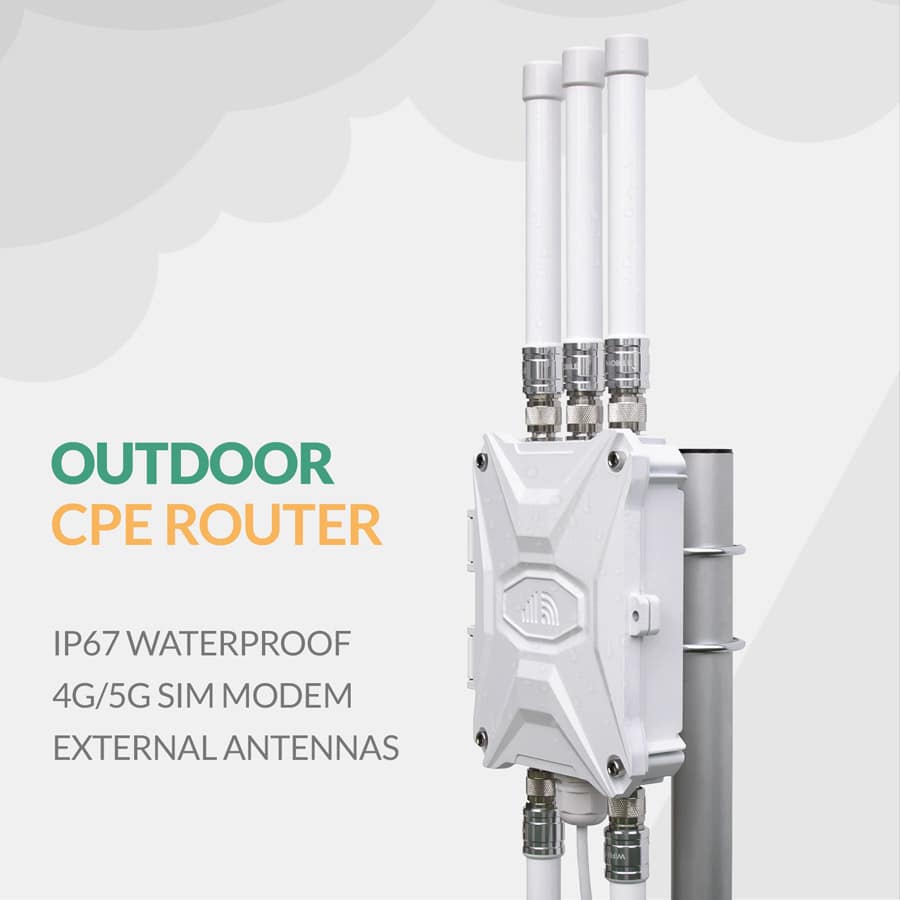
It’s a standalone wireless router that connects to widely deployed 4G/5G mobile networks and provides internet connectivity in demanding outdoor environments for outdoor events and rural areas.
The outdoor router has a rugged enclosure with an IP67 waterproof rating for protection from dust and weather. It has MIMO external antennas for optimal wireless signal coverage.
We produce various outdoor CPE routers to adapt to worldwide mobile networks and expand coverage for homes, businesses, events, transportation, and IoT applications. Click to check more details.
Summary of Outdoor CPE and Router
Commonalities
- Outside Wi-Fi Hotspot
- Outdoor Wireless Internet Coverage
- Basic Waterproof Function
- PoE and Wired Ethernet Connection
- Outdoor External RF Antennas
- Better Signal Coverage in Outside
Differences of CPE
- No Mobile Modem and SIM Slot
- Most Without Wi-Fi Relay
- Basic Dust-proof – Non-waterproof
- Wired WAN Connection without Ethernet
- Not Replaceable Upgradeable Antennas
- Non-Open-sourced CPE router firmware
Outdoor Router Advantages

- Full routing functions (NAT, DHCP, firewall)
- SIM-based 4G/5G mobile WAN
- Upgradeable antennas and firmware
- Support for VPN, VLAN, QoS, and load balancing
- Advanced failover and network redundancy
- Remote management and monitoring
Best Practices for Outdoor Networking
Outdoor CPEs, Wi-Fi extenders, and outdoor routers address various outdoor connectivity needs. CPEs and erxtenders expand existing networks, while outdoor routers offer full routing capabilities and independent mobile internet access.
Before deploying an outdoor network, check how the internet will enter the area and where coverage is needed. This ensures that the device type and installation method match your environment and performance requirements.
i. If you already have a stable indoor router with wired broadband, an outdoor CPE and Wi-Fi extender will meet your needs.
ii. For locations without wired broadband or when the outdoor device must serve as the primary gateway, an outdoor router with a SIM-based 4G/5G modem is the better solution. It connects to mobile networks and distributes the internet like a standard router. It has a rugged outdoor form factor designed for long-term exposure to the elements.
When deploying an outdoor CPE or an outdoor router, it is important to choose a device with IP67-rated waterproof protection to ensure long-term operation. Additionally, include MIMO external antennas that offer high gain and low loss to achieve optimal wireless performance. Lastly, make sure to have robust surge protection for the CPE router to ensure safe outdoor deployment.
If you need help choosing the right solution or designing a complete outdoor networking plan, feel free to contact us—we’re always here to assist.